
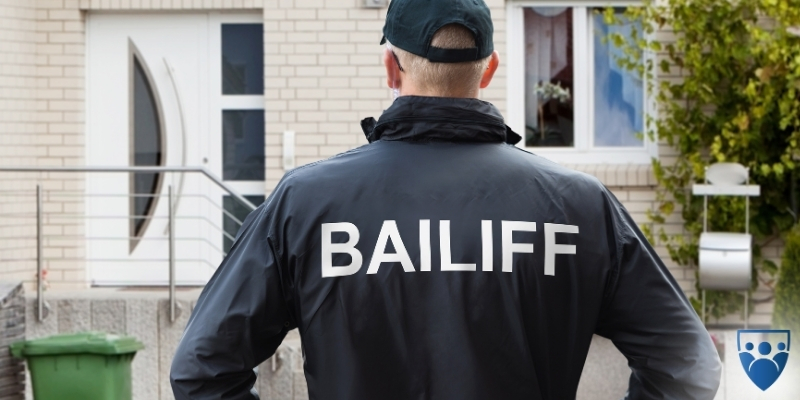
What Is a Council Tax Bailiff?
Receiving a letter about Council Tax bailiffs can be the most frightening part of dealing with debt. It’s a huge source of worry about losing your possessions or your home. As specialists in providing debt relief, UK Debt Support has helped thousands of people navigate and resolve serious debt issues, often by stopping bailiff action entirely with solutions like an IVA.
This guide gives you clear, simple facts based on UK law about who these agents are and, most importantly, the limited legal powers they have. Understanding What Is a Council Tax Bailiff is the first step toward taking control.
What Is a Council Tax Bailiff?
Summary
A Council Tax Bailiff (officially an Enforcement Agent) is a person given court power to collect debt. They are legally different from debt collectors and must follow strict rules, including giving notice and respecting your privacy. They cannot force their way into your home for Council Tax debt and cannot take essential belongings. What Is a Council Tax Bailiff is a question best answered by knowing your rights and addressing the underlying debt through a formal solution.
How do council tax bailiffs differ from debt collectors?
The key difference is legal power
Council Tax Bailiffs
Council Tax Bailiffs are officially called Certificated Enforcement Agents (CEAs). They have been given authority by a court (via a Liability Order) to legally collect the debt and, as a last resort, seize goods. They must show you their certificate and ID
Debt Collectors
Debt Collectors have NO legal powers to seize goods or force entry. They are simply asking you to pay. If a debt collector visits, they must leave immediately if you ask them to.
Who sends council tax bailiffs in the UK?
Bailiffs are instructed by your Local Council (Local Authority) after receiving a court order.
Your Council will only use a bailiff after they have tried other methods and have gone to the Magistrates’ Court to obtain a Liability Order against you. The bailiff is a private company hired by the Council to enforce that court order. They must send you a Notice of Enforcement at least seven working days before their first visit
What items can bailiffs legally take for council tax debt?
Bailiffs can only take things that are not essential for you and your family to live.
The bailiff is looking for items they can sell to pay your debt. These are typically high-value, non-essential goods, such as:
Luxury electronics (e.g., big screen TVs, game consoles).
Jewellery or antiques.
Items not fully owned by you, but only if the actual owner agrees to the seizure (which is rare).
What items are bailiffs not allowed to take?
UK law protects your basic right to live and work. Bailiffs are strictly forbidden from taking certain exempt goods.
Bailiffs are strictly forbidden from taking:
Essential household items, including your cooker, fridge, washing machine, phone, beds, and enough chairs/tables for your family.
Clothing and bedding for you and your family.
Tools or equipment you need for your job, trade, or education, up to a total value of £1,350.
Items belonging to someone else who lives in your home (you may need to provide proof of separate ownership)

Get Help To Stop Bailiff Action Now
We Help Hundreds Of Clients Per Week To Stop Bailiff Debt Going Further
Can bailiffs take my car for council tax arrears?
Yes, they can seize or clamp your car if you own it outright.
Bailiffs can target your vehicle on your driveway or on a public road, as they do not need to enter your home to do this. However, they cannot take a vehicle if:
It is on a Hire Purchase (HP) or lease agreement (as the finance company owns it).
It is a Motability vehicle or essential transport for a person with a valid Blue Badge.
How many times can a bailiff visit for council tax?
he bailiff may visit multiple times within the 12-month period of their warrant.
There is no formal limit on visits between 6 am and 9 pm. They will continue to return until the debt is paid, a payment plan is agreed, or they decide the debt is uncollectible and return the warrant to the Council. More visits mean more fees are added to your debt.
What happens if you don’t open the door to a bailiff?
For Council Tax debt, you do not have to open the door, and it is safer if you do not.
A Council Tax bailiff cannot legally force entry (e.g., they cannot break the door or hire a locksmith) unless they have previously been let into your home and you have broken a signed Controlled Goods Agreement. If you refuse entry, they will leave a notice and may look for goods outside, like your car. The power remains with you—keep all doors locked and communicate with their office over the phone.
Conclusion
The fear associated with the question, “What Is a Council Tax Bailiff?” is often worse than the reality, provided you know your rights and take action. Their presence is a signal that your debt situation is now urgent and requires a formal, comprehensive solution.
The most effective way to deal with bailiffs is not to avoid them, but to address the underlying debt. A solution like an Individual Voluntary Arrangement (IVA) instantly stops all enforcement action, freezes interest and fees, and allows you to pay back what you can afford, with the remainder of your eligible debt legally written off.
Key Takeaways
- Your Power: You are not legally required to open your door to a Council Tax bailiff.
- Protected Assets: The law protects essential goods (cooker, beds, work tools up to £1,350) from seizure.
- What Is a Council Tax Bailiff? They are court-authorised agents; they are not debt collectors and their powers are limited.
- Fees Increase: Every visit adds high fees to your original debt. Don’t avoid the issue—address it.
- IVA Stops Bailiffs: An IVA is a powerful legal solution that freezes bailiff action and works toward clearing your debt.
- See Our Complete Guide To Bailiffs And Council Tax – CLICK HERE
Contact Out Team Today
By submitting your details you are agreeing to UK Debt Support contacting you by Phone, Text and Whatsapp, You also agree to the information located in our privacy policy
What Our Clients Say About Us
"They really helped me get out of a massive hole of debt I was falling worse into I can't thank them enough for helping me I feel so much beta and can sleep now without worrying what's going to happen"
Sharon
“ I felt a lot of pressure had been taken off me once I had spoken to them. They kept me upto date every step of the way during my Iva set up and I was able to call anytime I needed advice.”
Holly
“Excellent service and the most understanding and polite staff. Very straight forward and easy to understand and clear problem solving. Private and confidential discussions with confidence. Thank you to all.”
Michelle
we’re here to Answer
all your questions
What is a Council Tax Bailiff, and how do they differ from a debt collector?
A Council Tax Bailiff is a Certificated Enforcement Agent (CEA) appointed by the Council after obtaining a court order (a Liability Order). They have legal power to seize goods. A debt collector is a private agent who has no legal power to enter your property or seize your belongings.
What should I do when a bailiff visits my home?
You should not open the door. Speak to them through the letterbox or over the phone. Ask them to pass their ID, certificate, and the original Warrant of Control through the letterbox. Do not let them in, as allowing entry once gives them the legal right to re-enter later using force if you break an agreement.
What is a Council Tax Bailiff's official title?
A Council Tax Bailiff is officially known as a Certificated Enforcement Agent (CEA). They must be certified by a County Court judge to enforce debts by seizing goods.
How are Council Tax Bailiffs different from standard debt collectors?
The key difference is legal power. A Council Tax Bailiff acts on a court order (a Liability Order) and has the power to seize goods. A standard debt collector has no legal power to enter your property or remove possessions.
What must a Council Tax Bailiff show me before I deal with them?
Before you let them in or pay them, they must show you proof of identity (ID badge) and their Certificated Enforcement Agent certificate, along with a copy of the Warrant of Control (the court document authorising the action).
What items are legally protected from a Council Tax Bailiff?
The law protects exempt goods essential for basic living, such as clothing, bedding, basic furniture (beds, chairs), essential kitchen appliances (fridge, cooker), and tools/equipment needed for your job up to £1,350 in value.
How many days notice must a Council Tax Bailiff give before visiting?
They must issue a Notice of Enforcement at least seven clear working days before their first visit to your property. If they do not, their visit may be invalid.
Can a Council Tax Bailiff seize my vehicle if it is on finance?
No. A Council Tax Bailiff cannot seize a vehicle that is on a Hire Purchase or lease agreement, as the vehicle is legally owned by the finance company, not the debtor.
What happens after a Council Tax Bailiff returns the debt to the council?
If the bailiff cannot collect the debt, they return the warrant. The debt does not go away; the Council will then pursue other enforcement options, such as taking money directly from your wages (Attachment of Earnings) or benefits.

Email us – Enquiries@ukdebtsupport.co.uk

You can visit the Money Helper website to find out more about managing your money and to get free advice, they are an independent service set up to help people manage their money
UK Debt Support is a trading style of SLWB LTD (Company No. 16451543).
Registered Office: Second Floor A, Cheadle Place, Cheadle, Cheshire, England, SK8 2JX.
Adam Southard is authorised as a Licensed Insolvency Practitioner in the United Kingdom by the Insolvency Practitioners Association, We only provide advice after completing or receiving an initial fact find where the individual(s) concerned meet the criteria for one of our insolvency solutions, therefore, all advice regarding Individual Voluntary Arrangements (IVA) is given in reasonable contemplation of an insolvency appointment.
Adam Southard is licensed to act as an Insolvency Practitioner in the UK by the Insolvency Practitioners Association. Office Holder No. 11930
Insolvency Practitioner Directory- Insolvency Practitioner Details (bis.gov.uk)
What you need to know about Individual Voluntary Arrangements
(Insolvency Service)
We provide solutions to individuals throughout the UK, We Will help recommend solutions available to your circumstances in which you can then make an informed decision about which solution you qualify for is best for you and your circumstances.
- Privacy Policy
- Complaints Handling Policy